
 Authored by:
Padraig Reilly
Authored by:
Padraig Reilly
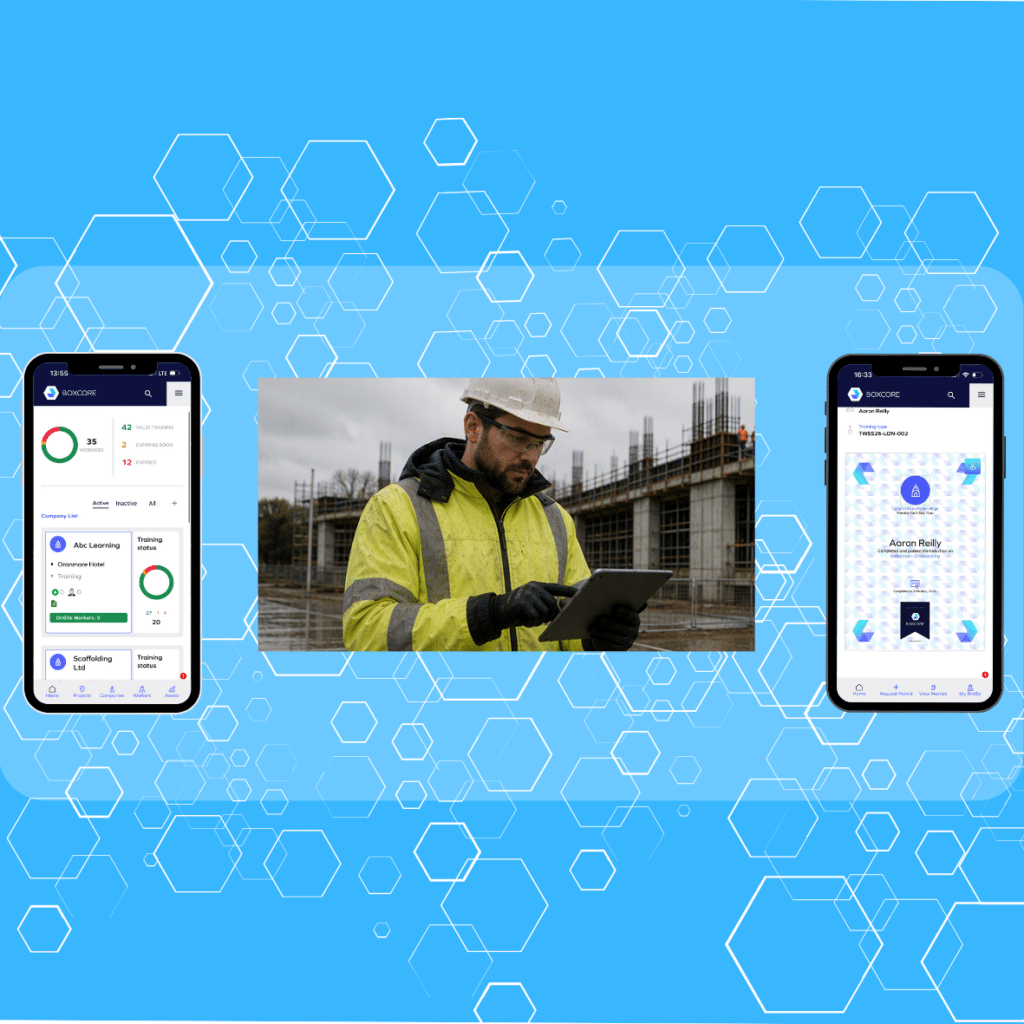
There are many types of Construction safety software which come in different forms, from general business tools adapted for site use to specialist platforms built exclusively for managing compliance and workforce records. The right choice can mean faster onboarding, better data control, and easier site audits. The wrong choice can add yet another layer of admin that site teams will resist.
This guide explores five main types of construction safety software solutions, alongside five key factors every contractor should consider before committing to a system.
Unlike many industries, construction sites bring together multiple employers, subcontractors, and trades who may only be on site for a matter of days or weeks. Teams are constantly changing, work is time-critical, and safety compliance is non-negotiable.
In this environment:
As Padraig Reilly, Founder & CEO of Boxcore, puts it:
“If a system isn’t simple enough to pick up in minutes, it won’t get used on site. Our focus has always been on building tools that work for the boots on the ground.”
Many contractors start with general file-sharing tools. They can store risk assessments, method statements, and training records in shared folders.
Strengths:
Weaknesses:
Generic platforms can work for small teams with stable crews, but they struggle with the pace and complexity of large projects.
Point solutions specialise in one function – often inspections, checklists, or forms. They can be excellent for digitising a single process.
Strengths:
Weaknesses:
Point solutions can be a good stop-gap but rarely solve the bigger challenge of unifying safety data across a project.
These platforms offer broad project management capabilities – drawings, RFIs, change orders – alongside compliance tools.
Strengths:
Weaknesses:
For contractors already committed to a platform like Procore, the challenge is ensuring the safety features are adopted by site crews, not just office based staff. The right types of construction safety software must ensure adoption where it matters – at the frontline.
Built specifically for managing safety and workforce compliance, platforms like Boxcore are designed for rapid adoption.
Strengths:
Weaknesses:
This category is growing rapidly because it solves the day-to-day admin pain points that matter most to site teams and subcontractors.
Some contractors develop their own tools, often starting as Excel macros or internal databases.
Strengths:
Weaknesses:
In-house builds can give a sense of control but often lack the refinement and user-experience focus of dedicated platforms. However these solution typically don’t deliver as building a scalable software solution requires full time dedication and focus when contractors are dealing with the ongoing pressures of delivering projects.
If it’s not simple, site teams won’t use it.
Look for:
Boxcore’s approach is to have subcontractors and site teams live in under 48 hours, often with just a few minutes of training.
A single source of truth means no chasing multiple spreadsheets, email threads, or file versions. The platform should handle:
Centralising data reduces admin and makes audits straightforward.
Integrating safety data with access control ensures only trained, compliant workers can enter site. Facial recognition technology adds further security and removes the need for swipe cards that can be lost or shared.
Benefits include:
For contractors already using platforms like Procore or Autodesk, the different types of construction safety software should integrate smoothly. This avoids double data entry and keeps project information connected.
Example: Boxcore’s Procore integration lets teams access and update safety data directly within their project management environment.
Construction software must handle:
Systems built for office-based industries often fail here. Choosing a platform created by people with site experience – as with Boxcore’s construction-led development – is critical to ensuring adoption with site users.
Many contractors start with generic tools or point solutions. Over time, they try different types of construction safety software and these often create fragmented data, duplicated effort, and compliance risks. A central, construction-specific safety platform that integrates with wider project tools offers:
For contractors looking to simplify safety management, reduce admin, and gain accurate site data, the move to a dedicated platform is a logical step. The challenge is choosing between different types of construction safety software is to ensure all required features are in place but equally importantly choosing a solution that can be adopted with site users with minimal effort involved.
To find out how Boxcores easy-to-implement solution can make your teams safer and more productive book a demo today.
From worker onboarding, training records, compliance tracking, safety documents, equipment management, to on-site time and attendance tracking — Boxcore’s software greatly simplifies construction site safety.