
 Authored by:
Padraig Reilly
Authored by:
Padraig Reilly
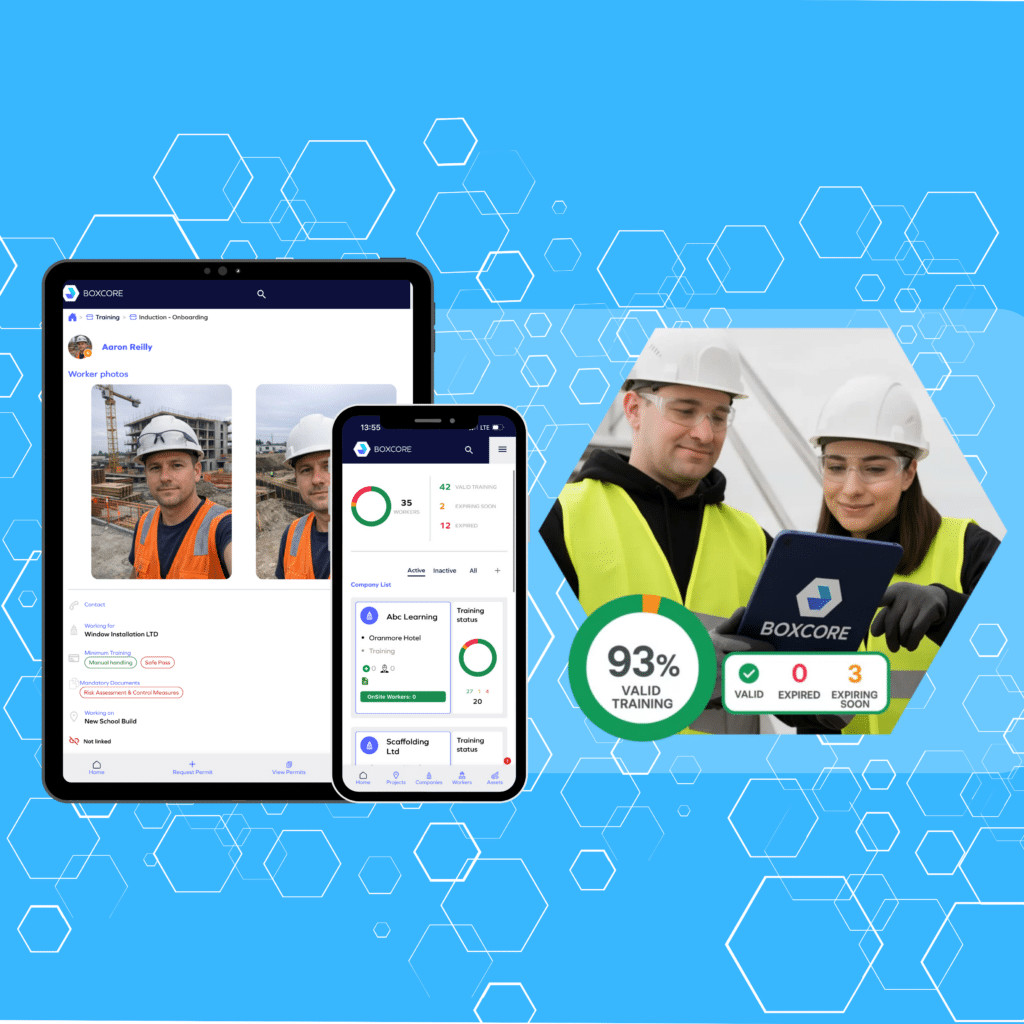
Construction time tracking software is no longer a nice-to-have for UK contractors. It has become a core part of running safe, compliant, and efficient projects. With increasing pressure around workforce visibility, compliance, and cost control, relying on paper sign-in sheets or disconnected apps simply doesn’t hold up on modern sites.
For many contractors, the challenge is not whether to adopt a system, but choosing one that site teams will actually use. If it slows people down or adds friction, it won’t be adopted. If it’s too complex, it won’t deliver value. The focus needs to be on simplicity, speed, and real-world usability.
This guide breaks down what to look for in construction time tracking software, with a clear focus on ease of use, flexibility, compliance, and bringing everything into one system.
Time tracking is often viewed as a payroll or reporting function. In reality, it sits at the centre of workforce management and site safety.
If you cannot answer these questions instantly, you have a problem:
Without a connected system, answering these questions involves chasing spreadsheets, emails, or site supervisors. That delay introduces risk and creates a drag on team productivity.
Modern construction time tracking software solves this by linking attendance with compliance. It ensures that only workers who meet requirements can access site, while giving management real-time visibility.
As outlined in Boxcore’s platform overview, bringing workforce data and safety records into one place removes the need for manual checks and reduces compliance risk significantly.
Many systems fail not because they lack features, but because site teams are too busy to use systems that aren’t intuitive and easy to use.
Construction environments are busy. Operatives are under pressure. Supervisors are juggling multiple priorities. If a system takes too long to learn or slows down entry to site, it will be bypassed.
The most effective construction time tracking software has:
Boxcore was designed specifically with this in mind, focusing on frontline usability so that operatives and subcontractors can get up and running quickly without friction.
You can see how this approach fits into broader contractor needs here:
https://www.boxcore.com/general-contractors/
If the system works for the people on the ground, everything else follows.
One of the biggest shifts in construction time tracking software is the move towards flexible check-in methods.
Different projects require different approaches. Some sites need controlled access points. Others require more open, flexible entry. A one-size system doesn’t work.
The best solutions offer both whilst still producing the required output reports and data for management.
Facial recognition provides:
It allows contractors to instantly verify who is on site, with no cards, no paperwork, and no manual checks. As highlighted in Boxcore’s construction time tracking software, facial recognition can provide real-time workforce visibility within seconds.
Self check-in is equally important for flexibility:
Combining both options gives contractors the ability to adapt to different project types without changing systems.
For a deeper look at access control in construction:
https://www.boxcore.com/access-control-software-for-construction/
Time tracking on its own is not enough. It must be connected to training and competency data.
In the UK, CSCS cards are a fundamental requirement. But beyond that, contractors must also track:
A disconnected system creates gaps. Workers may be signed in without valid training, exposing contractors to risk.
Modern construction time tracking software ensures:
Boxcore enables teams to see instantly whether training is in date or not from any device, removing the need for manual verification.
This ties directly into digital onboarding processes:
https://www.boxcore.com/effective-construction-worker-onboarding-how-boxcore-simplifies-the-process/
Inductions are often handled separately from time tracking, which creates unnecessary duplication and the need to manually cross check between different systems.
A better approach is to integrate induction management directly into the system.
This means:
When induction and time tracking are connected, access becomes conditional. Workers cannot check in unless they have completed the required induction.
This removes the risk of untrained workers entering site and reduces the administrative burden on supervisors.
Another key requirement in the UK is verifying right to work.
Managing this manually is time-consuming and prone to error. Documents can expire, get lost, or be incorrectly recorded.
Construction time tracking software should:
This ensures compliance without adding extra admin for site teams.
Manual time tracking creates a huge administrative burden.
Site teams often spend hours each week:
This process is slow and prone to mistakes.
Automated reporting changes this completely.
With the right system, contractors can:
Boxcore allows contractors to generate on-demand time and attendance reports with full visibility of workforce data.
This removes manual admin and gives management accurate, up-to-date information at all times.
One of the biggest issues on construction projects is the use of multiple disconnected systems.
You might have:
This leads to:
The better approach is a single platform that brings everything together.
Boxcore combines:
All in one place, creating a single source of truth for site data.
You can explore the full feature set here:
https://www.boxcore.com/product-features/
Having accurate data is important. Having it in real time is what makes it useful.
Construction time tracking software should give you:
This allows project managers and directors to make decisions quickly, without waiting for reports.
The right construction time tracking software improves safety by ensuring that everyone on site is accounted for and compliant.
Subcontractors are a major part of any project, but they also introduce complexity.
Each subcontractor may have:
Your system needs to handle this without creating extra work.
Boxcore allows subcontractors to upload and manage their own data, while giving main contractors full visibility and control.
This reduces back-and-forth communication and ensures that all information is up to date.
For subcontractor-specific workflows:
https://www.boxcore.com/subcontractors/
A common concern is how long it takes to implement new software.
In construction, long rollouts don’t work. Projects move too fast.
The right system should:
Boxcore typically gets contractors live within a couple of hours with subcontractors onboarded quickly through simple workflows.
This speed of deployment is critical for ensuring adoption and delivering value immediately.
“At the end of the day, our goal is simple: we want to give contractors tools that actually make their lives easier on site. It’s about cutting down the admin, improving safety and helping teams get the job done with less hassle.”
To summarise, UK contractors should focus on the following:
If any of these are missing, you will likely end up with gaps, inefficiencies, or poor adoption.
Construction time tracking software is no longer just about recording hours. It is about controlling access, ensuring compliance, and giving contractors real-time visibility across their workforce.
The difference between systems that succeed and those that fail comes down to practicality. If it works on site, it works everywhere. If it doesn’t, it won’t be used.
Contractors who move to a simple, integrated system are seeing immediate benefits:
The shift away from paper and disconnected tools is already happening. The question is not whether to adopt construction time tracking software, but how quickly you can implement a system that your teams will actually use.
To Find out why over 200 Contractors are using Boxcore to simplify safety and workforce management book a demo today.
From worker onboarding, training records, compliance tracking, safety documents, equipment management, to on-site time and attendance tracking — Boxcore’s software greatly simplifies construction site safety.